前言
对于从事后端开发的小伙伴来说,可能会遇到金额计算字段的类型,到底该用Long,还是BigDecimal的困扰。
甚至有些公司的架构师跟DBA,有时也会为了金额计算字段的类型而PK。
今天这篇文章专门跟大家一起聊聊这个话题,希望对你会有所帮助。
一、案发现场
有些小伙伴在工作中可能遇到过这样的场景:新来的开发小明负责公司电商平台的优惠券计算功能。
按照产品需求,满100减20的优惠券,用户下单金额是98.5元时,应该无法使用这张优惠券。
小明心想:这太简单了!
不到5分钟就写完了代码:- public class CouponService { public boolean canUseCoupon(double orderAmount, double couponThreshold) { return orderAmount >= couponThreshold; } public static void main(String[] args) { CouponService service = new CouponService(); double orderAmount = 98.5; double couponThreshold = 100.0; boolean canUse = service.canUseCoupon(orderAmount, couponThreshold); System.out.println("订单金额" + orderAmount + "元,能否使用" + couponThreshold + "元门槛优惠券:" + canUse); // 输出:订单金额98.5元,能否使用100.0元门槛优惠券:true }}
小明百思不得其解:98.5明明小于100,为什么条件判断会出错呢?
二、浮点数的陷阱:计算机的小秘密
要理解这个问题,我们需要知道计算机是如何存储小数的。
2.1 二进制世界的局限
- public class FloatProblemDemo { public static void main(String[] args) { // 看似简单的计算,却有问题 double a = 0.1; double b = 0.2; double c = a + b; System.out.println("0.1 + 0.2 = " + c); System.out.println("0.1 + 0.2 == 0.3 ? " + (c == 0.3)); // 让我们看看实际存储的值 System.out.println("0.1的实际值: " + new BigDecimal(a)); System.out.println("0.2的实际值: " + new BigDecimal(b)); System.out.println("0.1+0.2的实际值: " + new BigDecimal(c)); }}
- 0.1 + 0.2 = 0.300000000000000040.1 + 0.2 == 0.3 ? false0.1的实际值: 0.10000000000000000555111512312578270211815834045410156250.2的实际值: 0.2000000000000000111022302462515654042363166809082031250.1+0.2的实际值: 0.3000000000000000444089209850062616169452667236328125
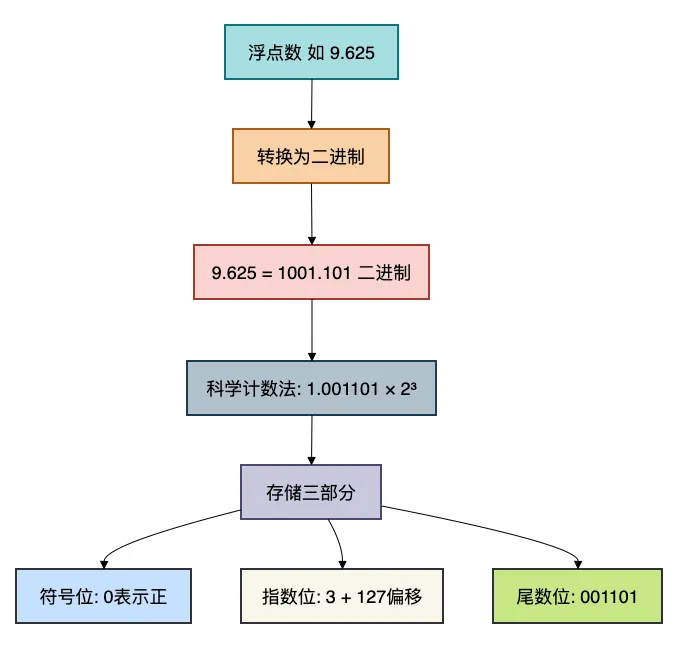
用一张图来理解浮点数的存储原理:
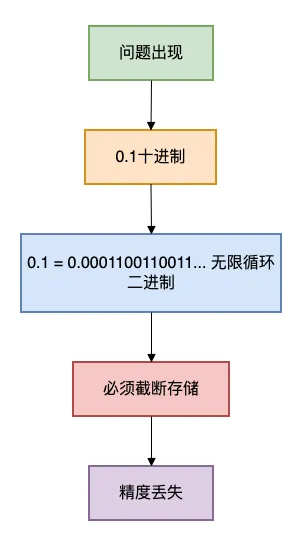
如何出现的问题?
这就好比用1/3 ≈ 0.333333来表示三分之一,永远无法精确。
计算机的二进制系统也无法精确表示某些十进制小数。
三、两种解决方案的深度PK
面对金额计算的精度问题,Java开发者主要有两种选择。
让我们深入剖析每种方案的实现和原理。
3.1 方案一:货币使用Long
这种方法的核心思想:用分来计算,不用元。- public class MoneyWithLong { // 所有金额都以分为单位存储 private Long amountInCents; public MoneyWithLong(Long amountInCents) { this.amountInCents = amountInCents; } // 加法 public MoneyWithLong add(MoneyWithLong other) { return new MoneyWithLong(this.amountInCents + other.amountInCents); } // 减法 public MoneyWithLong subtract(MoneyWithLong other) { return new MoneyWithLong(this.amountInCents - other.amountInCents); } // 乘法(处理折扣等场景) public MoneyWithLong multiply(double multiplier) { // 先将double转为整数分计算 BigDecimal bd = BigDecimal.valueOf(multiplier) .multiply(BigDecimal.valueOf(this.amountInCents)); return new MoneyWithLong(bd.longValue()); } // 格式化显示 public String display() { double yuan = amountInCents / 100.0; return String.format("%.2f元", yuan); } // 小明问题的正确解法 public static boolean canUseCoupon(Long orderAmountInCents, Long thresholdInCents) { return orderAmountInCents >= thresholdInCents; }}
- public class LongSolutionDemo { public static void main(String[] args) { // 解决小明的问题 Long orderAmount = 9850L; // 98.50元 Long threshold = 10000L; // 100.00元 boolean canUse = orderAmount >= threshold; System.out.println("订单98.5元能否使用100元门槛券: " + canUse); // 正确输出:false // 复杂计算示例 MoneyWithLong price1 = new MoneyWithLong(1999L); // 19.99元 MoneyWithLong price2 = new MoneyWithLong(2999L); // 29.99元 MoneyWithLong total = price1.add(price2); System.out.println("总价: " + total.display()); // 49.98元 // 折扣计算 MoneyWithLong discounted = total.multiply(0.8); // 8折 System.out.println("8折后: " + discounted.display()); // 39.98元 }}
BigDecimal是Java提供的专门用于精确计算的类。- public class MoneyWithBigDecimal { private BigDecimal amount; private static final int SCALE = 2; // 保留2位小数 private static final RoundingMode ROUNDING_MODE = RoundingMode.HALF_UP; public MoneyWithBigDecimal(String amount) { this.amount = new BigDecimal(amount).setScale(SCALE, ROUNDING_MODE); } public MoneyWithBigDecimal(BigDecimal amount) { this.amount = amount.setScale(SCALE, ROUNDING_MODE); } // 四则运算 public MoneyWithBigDecimal add(MoneyWithBigDecimal other) { return new MoneyWithBigDecimal(this.amount.add(other.amount)); } public MoneyWithBigDecimal subtract(MoneyWithBigDecimal other) { return new MoneyWithBigDecimal(this.amount.subtract(other.amount)); } public MoneyWithBigDecimal multiply(BigDecimal multiplier) { return new MoneyWithBigDecimal( this.amount.multiply(multiplier).setScale(SCALE, ROUNDING_MODE) ); } public MoneyWithBigDecimal divide(BigDecimal divisor) { return new MoneyWithBigDecimal( this.amount.divide(divisor, SCALE, ROUNDING_MODE) ); } // 比较 public int compareTo(MoneyWithBigDecimal other) { return this.amount.compareTo(other.amount); }}
- public class BigDecimalCorrectUsage { public static void main(String[] args) { // 错误用法:使用double构造 BigDecimal bad1 = new BigDecimal(0.1); System.out.println("错误构造: " + bad1); // 输出:0.1000000000000000055511151231257827021181583404541015625 // 正确用法1:使用String构造 BigDecimal good1 = new BigDecimal("0.1"); System.out.println("String构造: " + good1); // 输出:0.1 //正确用法2:使用valueOf方法 BigDecimal good2 = BigDecimal.valueOf(0.1); System.out.println("valueOf构造: " + good2); // 输出:0.1 // 除法的坑 BigDecimal a = new BigDecimal("10"); BigDecimal b = new BigDecimal("3"); try { // 不指定精度会抛异常 BigDecimal result = a.divide(b); } catch (ArithmeticException e) { System.out.println("必须指定精度: " + e.getMessage()); } // 正确做法 BigDecimal correctResult = a.divide(b, 2, RoundingMode.HALF_UP); System.out.println("10 ÷ 3 = " + correctResult); // 3.33 }}
有些小伙伴在工作中可能会问:两种方案性能差别大吗?对数据库有什么影响?
4.1 性能基准测试
- public class PerformanceBenchmark { private static final int ITERATIONS = 10_000_000; public static void main(String[] args) { // Long方案性能 long longStart = System.currentTimeMillis(); long totalCents = 0L; for (int i = 0; i < ITERATIONS; i++) { totalCents += 100L; // 1元 totalCents -= 50L; // 0.5元 totalCents *= 2; totalCents /= 2; } long longEnd = System.currentTimeMillis(); System.out.println("Long方案耗时: " + (longEnd - longStart) + "ms"); // BigDecimal方案性能 long bdStart = System.currentTimeMillis(); BigDecimal total = BigDecimal.ZERO; for (int i = 0; i < ITERATIONS; i++) { total = total.add(new BigDecimal("1.00")); total = total.subtract(new BigDecimal("0.50")); total = total.multiply(new BigDecimal("2")); total = total.divide(new BigDecimal("2"), 2, RoundingMode.HALF_UP); } long bdEnd = System.currentTimeMillis(); System.out.println("BigDecimal方案耗时: " + (bdEnd - bdStart) + "ms"); System.out.println("性能差异倍数: " + (bdEnd - bdStart) * 1.0 / (longEnd - longStart)); }}
- Long方案耗时: 25msBigDecimal方案耗时: 1250ms性能差异倍数: 50.0
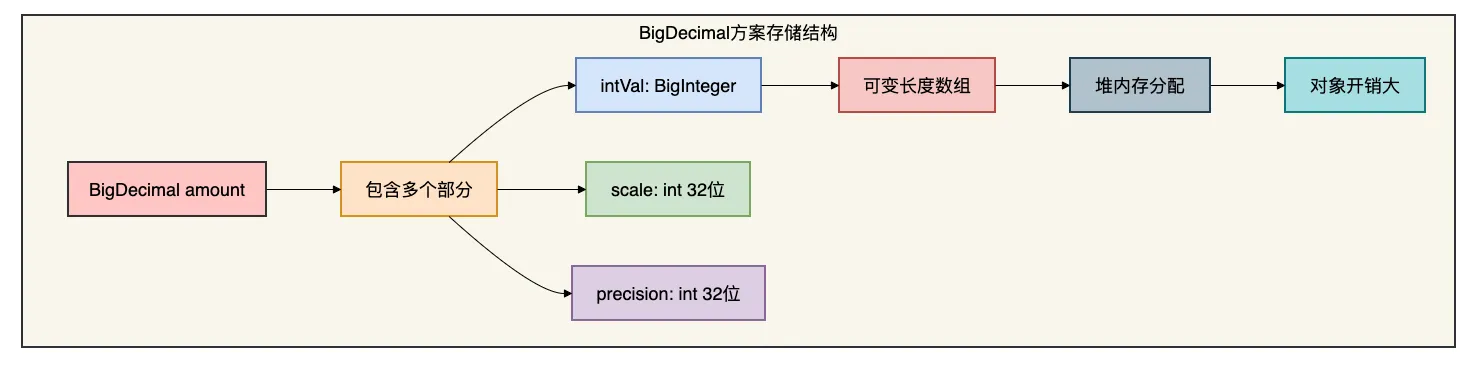
4.2 存储结构与原理分析
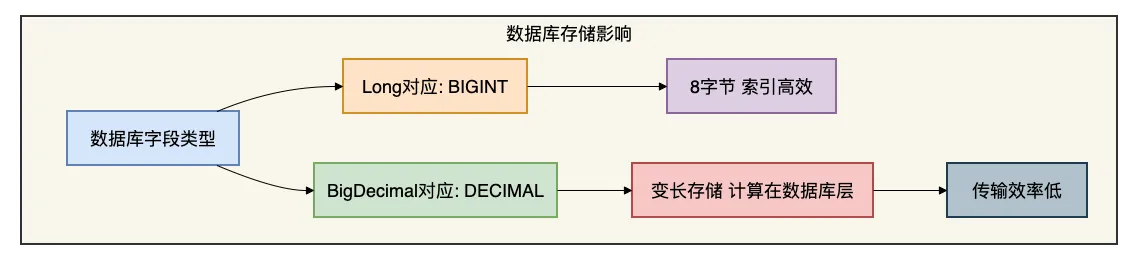
下面用几张图对比两种方案的存储:
4.3 数据库层面的考虑
- -- Long方案对应的表结构CREATE TABLE orders_long ( id BIGINT PRIMARY KEY, amount_cents BIGINT NOT NULL, -- 以分为单位 INDEX idx_amount (amount_cents) -- 索引效率高);-- BigDecimal方案对应的表结构CREATE TABLE orders_bd ( id BIGINT PRIMARY KEY, amount DECIMAL(20, 2) NOT NULL, -- 总共20位,2位小数 INDEX idx_amount (amount) -- 索引相对较大);
- 存储空间:BIGINT固定8字节,DECIMAL是变长的
- 索引效率:BIGINT比较更快
- 跨数据库兼容性:BIGINT几乎所有数据库都支持且行为一致
- 计算位置:DECIMAL可以在数据库层计算,但业务逻辑通常应在应用层
五、真实业务场景深度分析
没有银弹,只有适合场景的方案。
5.1 场景一:金融交易系统(推荐Long)
- // 银行核心系统示例public class BankTransactionSystem { // 账户余额(单位:分) private AtomicLong balanceInCents = new AtomicLong(); // 存款(线程安全) public boolean deposit(long cents) { if (cents = 0) { result = result.subtract(fullReduction); } // 优惠券 if (coupon != null) { result = result.subtract(coupon).max(BigDecimal.ZERO); } // VIP额外95折 if (isVIP) { result = result.multiply(new BigDecimal("0.95")) .setScale(2, RoundingMode.HALF_UP); } return result; } // 分摊计算(如订单多个商品分摊优惠) public Map allocateDiscount( Map itemPrices, BigDecimal totalDiscount ) { BigDecimal totalPrice = itemPrices.values().stream() .reduce(BigDecimal.ZERO, BigDecimal::add); Map result = new HashMap(); BigDecimal allocated = BigDecimal.ZERO; List keys = new ArrayList(itemPrices.keySet()); for (int i = 0; i < keys.size(); i++) { String key = keys.get(i); BigDecimal price = itemPrices.get(key); // 按比例分摊 BigDecimal ratio = price.divide(totalPrice, 10, RoundingMode.HALF_UP); BigDecimal itemDiscount = totalDiscount.multiply(ratio) .setScale(2, RoundingMode.HALF_UP); // 最后一个商品承担剩余金额 if (i == keys.size() - 1) { itemDiscount = totalDiscount.subtract(allocated); } result.put(key, price.subtract(itemDiscount)); allocated = allocated.add(itemDiscount); } return result; }}
有些复杂的系统会采用混合方案:- public class HybridMoneySystem { // 核心账户系统用Long private static class AccountCore { private long balanceCents; // 分单位 public void transfer(AccountCore to, long cents) { // 高性能的整数运算 this.balanceCents -= cents; to.balanceCents += cents; } } // 营销计算用BigDecimal private static class MarketingCalculator { public BigDecimal calculateCampaignEffect( BigDecimal budget, BigDecimal conversionRate, BigDecimal avgOrderValue ) { // 复杂的浮点计算 BigDecimal estimatedOrders = budget.multiply(conversionRate) .divide(avgOrderValue, 4, RoundingMode.HALF_UP); return estimatedOrders.setScale(0, RoundingMode.HALF_UP); } } // 转换层 public static long yuanToCents(BigDecimal yuan) { return yuan.multiply(new BigDecimal("100")) .setScale(0, RoundingMode.HALF_UP) .longValue(); } public static BigDecimal centsToYuan(long cents) { return new BigDecimal(cents) .divide(new BigDecimal("100"), 2, RoundingMode.UNNECESSARY); }}
6.1 常见的坑
坑1:序列化问题- public class SerializationBug { // 使用默认序列化 private BigDecimal amount; // 正确做法 private transient BigDecimal amount; // 不自动序列化 public String getAmountForJson() { return amount.toString(); // 明确转为String } public void setAmountFromJson(String amountStr) { this.amount = new BigDecimal(amountStr); // 明确从String构造 }}
- public class EqualityBug { public static void main(String[] args) { BigDecimal a = new BigDecimal("1.0"); BigDecimal b = new BigDecimal("1.00"); System.out.println("a.equals(b): " + a.equals(b)); // false! System.out.println("a.compareTo(b): " + a.compareTo(b)); // 0 // BigDecimal的equals不仅比较值,还比较scale System.out.println("a.scale(): " + a.scale()); // 1 System.out.println("b.scale(): " + b.scale()); // 2 }}
- public class OverflowBug { public static void main(String[] args) { // Long的溢出 long max = Long.MAX_VALUE; System.out.println("MAX: " + max); System.out.println("MAX + 1: " + (max + 1)); // 变成负数! // BigDecimal没有溢出,但可能性能问题 BigDecimal huge = new BigDecimal(Long.MAX_VALUE); System.out.println("BigDecimal MAX * 2: " + huge.multiply(new BigDecimal("2"))); // 正确计算 }}
- // 金额处理的工具类public final class MoneyUtils { private MoneyUtils() {} // 工具类私有构造 // 全局统一的精度和舍入模式 public static final int DEFAULT_SCALE = 2; public static final RoundingMode DEFAULT_ROUNDING = RoundingMode.HALF_UP; // 安全的创建方法 public static BigDecimal safeCreate(String amount) { try { return new BigDecimal(amount).setScale(DEFAULT_SCALE, DEFAULT_ROUNDING); } catch (NumberFormatException e) { throw new IllegalArgumentException("无效金额: " + amount, e); } } // 转换方法 public static long yuanToCents(BigDecimal yuan) { return yuan.multiply(new BigDecimal("100")) .setScale(0, DEFAULT_ROUNDING) .longValueExact(); // 精确转换,溢出抛异常 } // 验证方法 public static boolean isValidAmount(BigDecimal amount) { if (amount == null) return false; if (amount.scale() > DEFAULT_SCALE) return false; return amount.compareTo(BigDecimal.ZERO) >= 0; } // 格式化显示 public static String format(BigDecimal amount) { return String.format("¥%.2f", amount); } public static String format(long cents) { return String.format("¥%.2f", cents / 100.0); }}
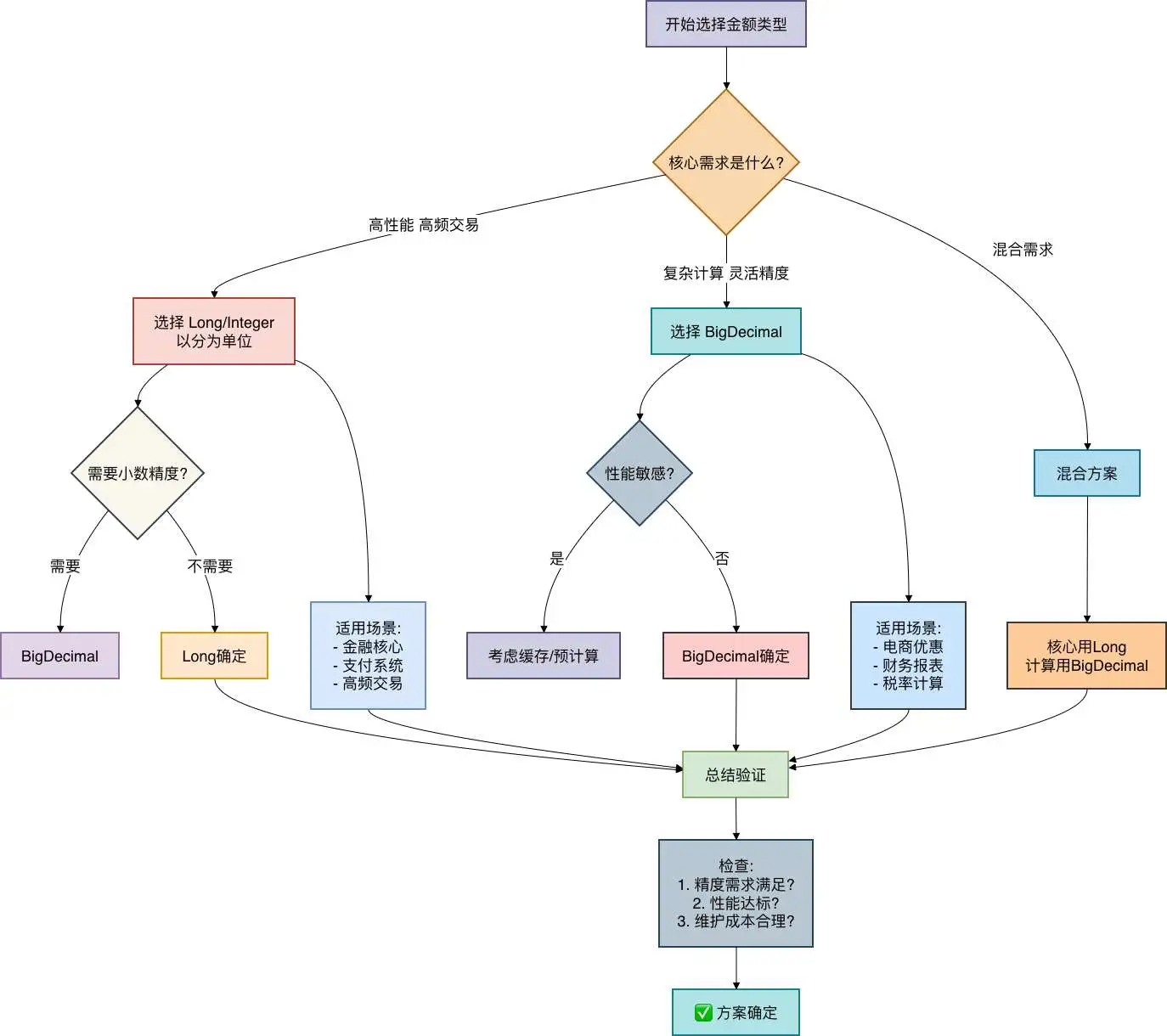
文章最后跟大家总结一下。
7.1 选择原则
我画了一张图帮你做选择:
7.2 终极建议
- 金融核心系统:优先使用Long方案
- 支付、清算、账户余额等
- 理由:性能、原子性、一致性
- 电商营销系统:优先使用BigDecimal方案
- 优惠计算、价格引擎、促销活动
- 理由:灵活性、计算精度、业务变化快
- 混合型系统:采用分层架构
- 核心层用Long保证性能
- 计算层用BigDecimal保证精度
- 表现层做好格式化显示
7.3 最后的建议
记住这三条铁律:
- 金额计算无小事,必须严格测试
- 选择适合业务的技术,而不是最新的技术
- 保持一致性,一个系统内不要混用多种方案
技术选型就像选工具,用对了事半功倍,用错了后患无穷。
希望这篇文章能帮你在金额计算的路上少踩坑,走得更稳更远。
更多项目实战在我的技术网站:http://www.susan.net.cn/project
最后说一句(求关注,别白嫖我)
如果这篇文章对您有所帮助,或者有所启发的话,帮忙关注一下我的同名公众号:苏三说技术,您的支持是我坚持写作最大的动力。
求一键三连:点赞、转发、在看。
关注公众号:【苏三说技术】,在公众号中回复:进大厂,可以免费获取我最近整理的10万字的面试宝典,好多小伙伴靠这个宝典拿到了多家大厂的offer。
来源:程序园用户自行投稿发布,如果侵权,请联系站长删除
免责声明:如果侵犯了您的权益,请联系站长,我们会及时删除侵权内容,谢谢合作! |



 提升卡
提升卡 置顶卡
置顶卡 沉默卡
沉默卡 喧嚣卡
喧嚣卡 变色卡
变色卡 千斤顶
千斤顶 照妖镜
照妖镜