使用中介者模式轻松实现命令查询职责分离,构建高内聚、低耦合的应用系统
一、知识点回顾
1. 什么是CQRS?
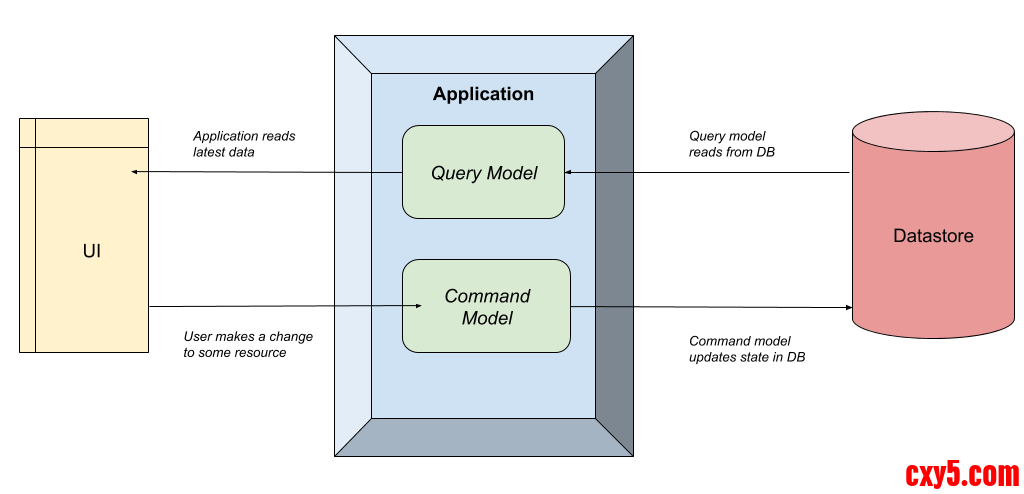
CQRS是Command Query Responsibility Segregation的缩写,一般称作命令查询职责分离。从字面意思理解,就是将命令(写入)和查询(读取)的责任划分到不同的模型中。
对比一下常用的 CRUD 模式(创建-读取-更新-删除),通常我们会让用户界面与负责所有四种操作的数据存储交互。而 CQRS 则将这些操作分成两种模式,一种用于查询(又称 "R"),另一种用于命令(又称 "CUD")。
2. CQRS的作用是什么?
CQRS将系统的写操作(命令)和读操作(查询)分离到不同的模型和数据存储中,从而实现读写分离,提高系统的性能、可扩展性和安全性,并使复杂业务逻辑(写端)和高效查询(读端)各自得到优化,降低系统复杂性。它允许为写操作设计严谨的领域模型,为读操作设计简单、只关注查询效率的数据模型(如专用视图或报表数据库),并可通过事件等机制保持最终一致性。
3. CQRS 的优点
- 独立缩放。 CQRS 使读取模型和写入模型能够独立缩放。 此方法可帮助最大程度地减少锁争用并提高负载下的系统性能。
- 优化的数据架构。 读取操作可以使用针对查询进行优化的模式。 写入操作使用针对更新优化的模式。
- 安全性。 通过分隔读取和写入,可以确保只有适当的域实体或操作有权对数据执行写入操作。
- 关注点分离。 分离读取和写入责任会导致更简洁、更易于维护的模型。 写入端通常处理复杂的业务逻辑。 读取端可以保持简单且专注于查询效率。
- 更简单的查询。 在读取数据库中存储具体化视图时,应用程序可以在查询时避免复杂的联接。
二、关于PipelinR
项目地址
https://github.com/sizovs/PipelinR
项目开发者在Github的介绍不多,关键是最后一句话:It's similar to a popular MediatR .NET library. 意思就是这个项目是参考着一个叫MediatR的.net库写的。关于MediatR我之前有两篇文章专门介绍过。
PipelinR(包括MediatR)提供了一种CQRS的实现方式,基于中介者模式实现进程内消息传递,用于解耦应用中的各个组件,支持请求/响应(一对一,有返回值)和发布/订阅(一对多,无返回值)两种消息模式。它们在内部提供管道行为 (Pipeline Behaviors),用于在消息处理前后插入自定义逻辑,如日志、验证、异常处理等。
需要提醒的是,PipelinR并不是一个完整的CQRS框架,它只是一个中介者模式的具体实现方式,将调用方和处理方进行了解耦,而这种模式恰好可以用来在一个单体应用(或者是微服务的服务内部)中实现简单的CQRS。
三、依赖安装和配置
1. Maven安装
- <dependency>
- <groupId>net.sizovs</groupId>
- pipelinr</artifactId>
- <version>0.11</version>
- </dependency>
- dependencies {
- compile 'net.sizovs:pipelinr:0.11'
- }
- @Configuration
- public class PipelinrConfiguration {
- @Bean
- Pipeline pipeline(ObjectProvider<Command.Handler> commandHandlers, ObjectProvider<Notification.Handler> notificationHandlers, ObjectProvider<Command.Middleware> middlewares) {
- return new Pipelinr()
- .with(commandHandlers::stream)
- .with(notificationHandlers::stream)
- .with(middlewares::orderedStream);
- }
- }
- Pipeline/Pipelinr:Pipeline是消息和处理器之间的中介者,调用方向Pipeline发送消息,Pipeline收到消息后通过注册到Pipeline的中间件进行层层传递并最终抵达匹配的消息处理器进行处理。Pipelinr是Pipeline的默认实现。
- Command:用于约定请求/响应模式的消息类型,泛型参数R是返回值的类型,如果不需要返回值,可以将R指定为Voidy。
- Notification:用于约定发布/订阅模式的消息类型,没有返回值,消息可以有多个处理器。
- Middleware:管道中间件,Command和Notification都定义了各自的中间件接口。Pipeline接收到的消息,在到达最终的处理器之前,会经过所有注册到Pipeline的中间。可以使用Middleware实现诸如日志记录、数据验证、开启事务等一系列操作。
五、请求/响应模式实现
请求/响应模式需要用到Command接口。
1. 定义Command
Command代表一个请求,需要实现net.sizovs.pipelinr.Command接口。泛型参数指定返回值类型。- // 定义一个创建用户的命令
- public class CreateUserCommand implements Command<UserResponse> {
- private String username;
- private String email;
-
- public CreateUserCommand(String username, String email) {
- this.username = username;
- this.email = email;
- }
-
- public String getUsername() {
- return username;
- }
-
- public String getEmail() {
- return email;
- }
- }
- // 返回值类型
- public class UserResponse {
- private Long userId;
- private String username;
- private String email;
-
- public UserResponse(Long userId, String username, String email) {
- this.userId = userId;
- this.username = username;
- this.email = email;
- }
-
- // getters
- }
创建该Command对应的处理器,实现net.sizovs.pipelinr.Command.Handler接口。- @Component
- public class CreateUserCommandHandler implements Command.Handler<CreateUserCommand, UserResponse> {
-
- @Autowired
- private UserRepository userRepository;
-
- @Override
- public UserResponse handle(CreateUserCommand command) {
- // 业务逻辑处理
- User user = new User();
- user.setUsername(command.getUsername());
- user.setEmail(command.getEmail());
-
- User savedUser = userRepository.save(user);
-
- return new UserResponse(savedUser.getId(), savedUser.getUsername(), savedUser.getEmail());
- }
- }
通过注入Pipeline实例,发送Command并获取响应。- @Service
- public class UserService {
-
- @Autowired
- private Pipeline pipeline;
-
- public UserResponse createUser(String username, String email) {
- CreateUserCommand command = new CreateUserCommand(username, email);
- UserResponse response = pipeline.send(command);
- return response;
- }
- }
中间件可以在Command处理前后执行一些操作,如验证、日志、事务管理等。- @Component
- public class LoggingMiddleware implements Command.Middleware {
-
- private static final Logger logger = LoggerFactory.getLogger(LoggingMiddleware.class);
-
- @Override
- public <R, C extends Command<R>> R invoke(C command, Chain<R> chain) {
- logger.info("Executing command: {}", command.getClass().getSimpleName());
- try {
- R result = chain.proceed(command);
- logger.info("Command executed successfully");
- return result;
- } catch (Exception e) {
- logger.error("Command execution failed", e);
- throw e;
- }
- }
- }
- @Component
- public class ValidationMiddleware implements Command.Middleware {
-
- @Autowired
- private Validator validator;
-
- @Override
- public <R, C extends Command<R>> R invoke(C command, Chain<R> chain) {
- Set<ConstraintViolation<C>> violations = validator.validate(command);
- if (!violations.isEmpty()) {
- throw new ConstraintViolationException("Validation failed", violations);
- }
- return chain.proceed(command);
- }
- }
- @Component
- @Order(1) // 指定中间件执行顺序
- public class TransactionMiddleware implements Command.Middleware {
-
- @Autowired
- private PlatformTransactionManager transactionManager;
-
- @Override
- public <R, C extends Command<R>> R invoke(C command, Chain<R> chain) {
- TransactionStatus status = transactionManager.getTransaction(new DefaultTransactionDefinition());
- try {
- R result = chain.proceed(command);
- transactionManager.commit(status);
- return result;
- } catch (Exception e) {
- transactionManager.rollback(status);
- throw e;
- }
- }
- }
发布/订阅模式使用Notification接口,用于一对多的消息分发,没有返回值。
1. 定义Notification
Notification代表一个事件通知,需要实现net.sizovs.pipelinr.Notification接口。- // 定义一个用户创建成功的事件通知
- public class UserCreatedNotification implements Notification {
- private Long userId;
- private String username;
- private String email;
- private LocalDateTime createdTime;
-
- public UserCreatedNotification(Long userId, String username, String email) {
- this.userId = userId;
- this.username = username;
- this.email = email;
- this.createdTime = LocalDateTime.now();
- }
-
- // getters
- }
Notification可以有多个处理器,每个处理器实现net.sizovs.pipelinr.Notification.Handler接口。- @Component
- public class SendWelcomeEmailHandler implements Notification.Handler<UserCreatedNotification> {
-
- private static final Logger logger = LoggerFactory.getLogger(SendWelcomeEmailHandler.class);
-
- @Autowired
- private EmailService emailService;
-
- @Override
- public void handle(UserCreatedNotification notification) {
- logger.info("Sending welcome email to user: {}", notification.getUsername());
- emailService.sendWelcomeEmail(notification.getEmail(), notification.getUsername());
- }
- }
- @Component
- public class LogUserCreationHandler implements Notification.Handler<UserCreatedNotification> {
-
- private static final Logger logger = LoggerFactory.getLogger(LogUserCreationHandler.class);
-
- @Autowired
- private UserAuditLogRepository auditLogRepository;
-
- @Override
- public void handle(UserCreatedNotification notification) {
- logger.info("Logging user creation: {}", notification.getUsername());
- UserAuditLog auditLog = new UserAuditLog();
- auditLog.setUserId(notification.getUserId());
- auditLog.setOperation("CREATE");
- auditLog.setTimestamp(notification.getCreatedTime());
- auditLogRepository.save(auditLog);
- }
- }
- @Component
- public class UpdateUserStatisticsHandler implements Notification.Handler<UserCreatedNotification> {
-
- private static final Logger logger = LoggerFactory.getLogger(UpdateUserStatisticsHandler.class);
-
- @Autowired
- private UserStatisticsRepository statisticsRepository;
-
- @Override
- public void handle(UserCreatedNotification notification) {
- logger.info("Updating statistics for new user: {}", notification.getUsername());
- UserStatistics stats = statisticsRepository.findOrCreate();
- stats.incrementTotalUsers();
- statisticsRepository.save(stats);
- }
- }
在Command处理完成后,可以发送Notification通知所有相关的处理器。- @Component
- public class CreateUserCommandHandler implements Command.Handler<CreateUserCommand, UserResponse> {
-
- @Autowired
- private UserRepository userRepository;
-
- @Autowired
- private Pipeline pipeline;
-
- @Override
- public UserResponse handle(CreateUserCommand command) {
- // 业务逻辑处理
- User user = new User();
- user.setUsername(command.getUsername());
- user.setEmail(command.getEmail());
-
- User savedUser = userRepository.save(user);
-
- // 发送事件通知
- UserCreatedNotification notification = new UserCreatedNotification(
- savedUser.getId(),
- savedUser.getUsername(),
- savedUser.getEmail()
- );
- pipeline.send(notification);
-
- return new UserResponse(savedUser.getId(), savedUser.getUsername(), savedUser.getEmail());
- }
- }
类似Command,Notification也支持中间件。- @Component
- public class NotificationLoggingMiddleware implements Notification.Middleware {
-
- private static final Logger logger = LoggerFactory.getLogger(NotificationLoggingMiddleware.class);
-
- @Override
- public <N extends Notification> void invoke(N notification, Chain chain) {
- logger.info("Publishing notification: {}", notification.getClass().getSimpleName());
- try {
- chain.proceed(notification);
- logger.info("Notification published successfully");
- } catch (Exception e) {
- logger.error("Notification publishing failed", e);
- throw e;
- }
- }
- }
- @Component
- public class NotificationErrorHandlingMiddleware implements Notification.Middleware {
-
- private static final Logger logger = LoggerFactory.getLogger(NotificationErrorHandlingMiddleware.class);
-
- @Override
- public <N extends Notification> void invoke(N notification, Chain chain) {
- try {
- chain.proceed(notification);
- } catch (Exception e) {
- logger.error("Error handling notification: {}", notification.getClass().getSimpleName(), e);
- // 可以选择吞掉异常或重新抛出,取决于业务需求
- // throw e;
- }
- }
- }
核心收获
通过本文的介绍,我们了解了如何在Java应用中使用PipelinR框架实现CQRS模式。核心要点总结如下:
1. CQRS的价值
- 读写分离:通过Command处理写操作,Notification处理事件响应,实现职责的明确划分
- 独立优化:读端和写端可以独立优化,不同的数据模型适应不同的场景需求
- 系统解耦:中介者模式解耦了调用方和处理方,提高了系统的可维护性和可扩展性
2. PipelinR的核心特性
- 轻量级实现:相比完整的CQRS框架,PipelinR更轻便,学习成本低
- 灵活的管道机制:通过中间件可以方便地植入横切关注点(如日志、验证、事务等)
- 支持两种消息模式:Command用于请求/响应,Notification用于发布/订阅
3. 最佳实践建议
- 合理使用中间件:通过@Order注解控制中间件执行顺序,但要避免中间件层级过多导致性能问题
- 异常处理:根据场景选择合适的异常处理策略,Notification可考虑不中断其他处理器的错误隔离
- 事件驱动设计:充分利用Notification实现事件驱动架构,解耦不同的业务流程
- 代码组织:按照Command、Handler、Middleware的划分方式组织代码,保持结构清晰
实施建议
适用场景
- 中等复杂度的业务系统,需要良好的代码结构和可维护性
- 业务逻辑相对复杂,需要事件驱动的系统设计
- 团队具备良好的DDD设计理念和架构意识
注意事项
- 学习曲线:虽然PipelinR本身简单,但要理解CQRS的设计理念需要一定时间
- 适度使用:CQRS不是银弹,过度设计会增加系统复杂度,要根据实际需求决定是否引入
- 团队协作:CQRS的有效实施对团队的整体架构意识和编码规范要求较高
- 性能考虑:虽然使用了中介者模式会引入少量额外开销,但对大多数应用来说可以忽略不计
结论
PipelinR提供了一种轻量级、简洁的CQRS实现方案。它特别适合那些想要在不过度复杂化系统的前提下,引入DDD思想和事件驱动设计的项目。通过合理运用Command和Notification,结合恰当的中间件设计,开发者可以构建出高内聚、低耦合、易于维护和扩展的应用系统。
关键是要把握好"度"——既要充分发挥CQRS和PipelinR的优势,又要避免为了追求"高大上"的架构而过度设计,最终的目标是为业务的快速迭代和长期维护提供支撑。
来源:程序园用户自行投稿发布,如果侵权,请联系站长删除
免责声明:如果侵犯了您的权益,请联系站长,我们会及时删除侵权内容,谢谢合作! |


 提升卡
提升卡 置顶卡
置顶卡 沉默卡
沉默卡 喧嚣卡
喧嚣卡 变色卡
变色卡 千斤顶
千斤顶 照妖镜
照妖镜